How Can AI Predict Vulcan Hart Equipment Failures Before They Happen?
Commercial kitchens depend on reliable equipment to maintain consistent food quality, fast service, and smooth daily operations. When a critical oven, fryer, range, griddle, steamer, or other cooking appliance suddenly stops working, the impact can extend far beyond the equipment itself. Orders may be delayed, food preparation can slow down, employees may be forced to change workflows, and unexpected repair expenses can increase.
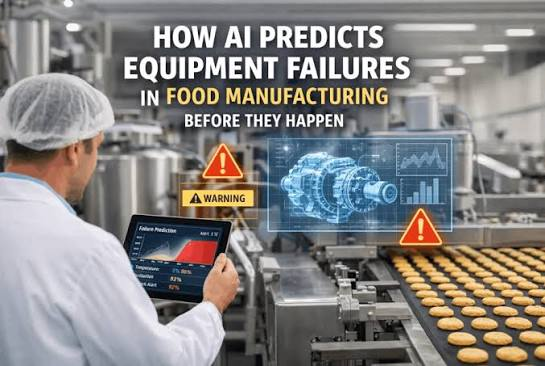
This is why AI-powered predictive maintenance is becoming an important technology for commercial kitchens. Instead of waiting until a machine fails, artificial intelligence can analyze equipment performance, identify unusual patterns, and help maintenance teams recognize potential problems earlier.
For businesses using Vulcan Hart equipment, combining predictive maintenance with dependable food service parts from suppliers such as PartsXP can create a more proactive approach to equipment maintenance.
What Is AI Predictive Maintenance for Vulcan Equipment?
AI predictive maintenance uses data, sensors, machine learning, and equipment history to identify changes in normal operating behavior.
Vulcan manufactures a wide range of commercial cooking equipment, including ranges, convection ovens, fryers, griddles, charbroilers, steamers, kettles, braising pans, broilers, and heated holding equipment.
Each type of equipment has normal operating characteristics. For example, a heating system should reach its target temperature within an expected period. A blower motor should operate within a relatively consistent electrical and mechanical pattern. A gas system should maintain appropriate operating behavior.
AI can analyze these patterns continuously. When the equipment begins behaving differently, the system can generate an alert indicating that inspection or maintenance may be necessary.
The goal is not to predict an exact failure time with absolute certainty. Instead, predictive maintenance identifies an increased probability of failure or performance degradation, giving technicians an opportunity to investigate before a small issue becomes a major breakdown.
How Does AI Detect Early Warning Signs?
AI predictive maintenance begins with data collection. Depending on the equipment and monitoring system, data can include temperature, electrical current, operating cycles, runtime, pressure, vibration, energy consumption, error codes, and maintenance history.
Machine-learning models then compare current performance against historical patterns and expected operating conditions.
For example, imagine a Vulcan convection oven that normally reaches its cooking temperature within a predictable period. Over several weeks, the preheating time gradually increases. A technician may not immediately recognize this as a serious problem because the oven is still operating.
An AI system, however, can identify the gradual change.
The system could flag the equipment for inspection before the heating system deteriorates further. A technician can then examine components such as heating elements, temperature controls, sensors, electrical connections, or other related restaurant equipment parts.
This approach can transform maintenance from reactive repair into proactive equipment management.
AI Can Monitor Vulcan Motors and Blowers
Motors and blowers are important components in many commercial cooking appliances. Mechanical wear, electrical problems, restricted airflow, or other issues can gradually affect performance.
AI can identify changes in motor behavior by analyzing factors such as electrical consumption, operating cycles, vibration, temperature, and runtime.
PartsXP currently lists Vulcan replacement components such as a Vulcan Motor Part #00-428449-00002 and Vulcan Blower Part #00-354262-00001.
When predictive analytics identifies abnormal motor or blower behavior, maintenance personnel can investigate the relevant component and determine whether cleaning, adjustment, repair, or replacement is appropriate.
Having the correct food service parts available can make this process more efficient because technicians can respond before an equipment failure causes significant kitchen downtime.
AI Can Identify Heating System Problems
Heating performance is critical for ovens, griddles, fryers, and other commercial cooking equipment.
A heating component that is beginning to deteriorate may not fail immediately. Instead, the equipment could show subtle changes such as slower temperature recovery, longer heating cycles, inconsistent cooking temperatures, or increased energy consumption.
AI can analyze these changes over time and identify patterns that might indicate component degradation.
PartsXP lists Vulcan heating-related components, including the Vulcan Element Griddle 208V 2700W Part #00-351360-00001.
If data suggests that heating performance is moving outside its normal range, a technician can inspect the equipment and determine whether the heating element or another related component requires attention.
Predicting Gas and Ignition Problems
Gas-fired commercial equipment can also benefit from condition monitoring.
Changes in ignition behavior, burner performance, temperature stability, or gas-system operation may provide useful maintenance signals. However, gas equipment requires qualified service personnel and appropriate safety procedures; AI should support professional maintenance rather than replace it.
PartsXP currently lists Vulcan components such as the Vulcan Burner Assembly Part #00-833076-00001, Vulcan Gas Valve Part #00-410841-00028, and Vulcan Pilot Assembly Part #00-858579-00014.
If monitoring data indicates abnormal burner or ignition behavior, trained technicians can investigate the equipment and determine which component, if any, requires replacement.
How PartsXP Supports Predictive Maintenance
AI can help identify that equipment performance is changing, but predictive maintenance ultimately needs an actionable maintenance response.
That is where PartsXP can become part of the maintenance workflow.
PartsXP provides Food Service Parts & Supplies for commercial kitchen and refrigeration equipment, including components such as heating elements, gaskets, switches, valves, and electronic controls. The platform also provides Vulcan parts listings that can be searched by manufacturer and part number.
For maintenance teams, the workflow can become straightforward:
Monitor → Detect → Diagnose → Identify the Part → Repair → Verify Performance
For example, AI could identify declining performance in a commercial oven. A technician investigates the equipment, identifies the failed or worn component, verifies the correct model and part number, and sources the appropriate replacement food service parts through PartsXP.
This can reduce the time between identifying a potential problem and completing the repair.
Why Predictive Maintenance Matters for Restaurants
Unexpected commercial kitchen equipment failure can affect more than repair budgets. It can disrupt food preparation, reduce productivity, increase labor pressure, and potentially affect customer satisfaction.
Predictive maintenance provides an opportunity to schedule inspections and repairs around kitchen operations rather than waiting for equipment to fail during peak service.
Vulcan itself emphasizes the importance of maintenance and provides service and parts resources for its commercial cooking equipment.
When predictive technology is combined with regular inspections, professional servicing, accurate diagnostics, and dependable replacement components, restaurants can build a more comprehensive equipment reliability strategy.
The Future of AI and Commercial Kitchen Equipment
AI will not eliminate every equipment failure. Some components can fail suddenly with little warning, while other problems develop gradually and produce detectable patterns. The quality of predictions also depends on the available data, sensor quality, equipment history, and the predictive model being used.
Research into AI-based fault diagnosis and predictive maintenance shows that real-time equipment data and machine-learning techniques can be used to identify potential failure modes and support maintenance planning in food-related equipment environments.
The future, therefore, is not simply about replacing technicians with AI. It is about giving technicians better information.
For Vulcan Hart equipment, AI can help answer an increasingly important maintenance question:
“Is this equipment beginning to behave differently before the failure becomes obvious?”
When the answer is yes, maintenance teams have an opportunity to investigate, source the necessary Vulcan parts, and complete repairs before a minor performance problem develops into costly downtime.
Frequently Asked Questions About AI and Vulcan Equipment
Can AI predict when a Vulcan oven will fail?
AI can identify abnormal operating patterns that may indicate an increased risk of failure. It generally should not be treated as a tool that can guarantee an exact failure date or time.
What Vulcan equipment can benefit from predictive maintenance?
Commercial ovens, fryers, ranges, griddles, steamers, broilers, braising equipment, and other connected or monitored kitchen equipment can potentially benefit from predictive maintenance.
What data does AI use to predict equipment problems?
Depending on the monitoring system, AI may analyze temperature, runtime, energy consumption, electrical current, vibration, pressure, error codes, operating cycles, and maintenance history.
Where can businesses find Vulcan food service parts?
Businesses can use PartsXP to search its Vulcan parts selection by manufacturer and part number. Available listings include components such as motors, burners, blowers, heating elements, gas valves, and pilot assemblies.
Does predictive maintenance replace professional technicians?
No. AI should be viewed as a decision-support technology. Qualified technicians remain essential for inspection, diagnosis, installation, safety procedures, and equipment repair.
Conclusion
AI is changing how commercial kitchens approach equipment maintenance. Instead of relying entirely on reactive repairs, restaurants can use equipment data and predictive analytics to identify unusual behavior before it develops into a major failure.
For Vulcan Hart equipment, early detection can help maintenance teams investigate heating systems, motors, blowers, burners, valves, controls, and other components before unexpected downtime affects kitchen operations.
When predictive maintenance is combined with professional servicing and reliable food service parts, businesses can create a smarter approach to restaurant equipment reliability.
PartsXP supports this strategy by providing access to Vulcan replacement parts and other commercial kitchen components, helping maintenance teams move from detecting a problem to finding the appropriate replacement component more efficiently.


